
Can you replace just the window on a garage door? In most cases, yes. Garage door window replacement usually means swapping the broken glass or acrylic, or replacing the whole window insert (the frame and the glazing together), without replacing the door section. Most windows on modern steel doors are held in place by a two-piece frame that clamps the glass from the inside and outside, so the window can come out without taking the door apart. A full section replacement is needed when the window frame is built into the section (common on full-view aluminum and glass doors), when the panel around the window is bent or cracked, or when the original window size is no longer made. Until it is fixed, clean up the glass safely, cover the opening, and avoid running the door if loose shards could fall. Advanced Door is Utah’s #1 rated garage door company: family owned since 1994, 4.9 stars, 30,000+ five-star reviews, and the only company in Utah offering a lifetime warranty on parts and labor. Call (844) 971-3667 for a free estimate.
Last updated: October 2026
It usually happens in a split second. A hailstone the size of a golf ball, a baseball off the bat of a neighbor kid, a rock thrown by the snowplow, or a bumper that tapped the door a little too hard. Then you walk into the garage and find glass on the floor, a spiderweb crack across a pane, or a window frame hanging loose.
The good news: a broken window rarely means you need a new garage door. Garage door window replacement is one of the most common small repairs we handle, and in most cases it is quick and far less disruptive than replacing a panel or the whole door. The key is knowing what kind of window you have, what replacement options exist, and which parts of the job are safe for a homeowner and which are not.
Utah adds its own twist. Our spring and summer hailstorms, gravel-heavy winter roads, high-altitude sun that yellows plastic, deep temperature swings, and dry canyon winds all affect garage door windows differently than they do in milder climates. A replacement that lasts decades in Seattle can haze over in a few years on a south-facing St. George driveway.
This guide walks you through everything: what to do in the first hour after a window breaks, how garage door windows are built, every common window problem (broken, cracked, foggy, yellowed, leaking, rattling), your replacement options from glass-only to full section, how to choose between tempered glass, acrylic, polycarbonate, and insulated glass, what to expect from a professional replacement, and how to keep it from happening again. If you need help now, call (844) 971-3667. Estimates are always free.
Table of Contents
- 1. Can You Replace Just the Window on a Garage Door?
- 2. How Garage Door Windows Are Built
- 3. Common Garage Door Window Problems
- 4. What Breaks Garage Door Windows in Utah
- 5. What to Do Right After a Window Breaks
- 6. Garage Door Window Replacement Options Compared
- 7. Choosing Replacement Glass or Acrylic
- 8. Best Window Choices by Utah Region
- 9. Matching Your Door: Brand, Size, and Style
- 10. DIY vs Professional Window Replacement
- 11. What a Professional Window Replacement Looks Like
- 12. Foggy Windows, Condensation, and Leaks
- 13. Hail, Vandalism, and Insurance
- 14. How to Protect Garage Door Windows
- 15. How Advanced Door Helps
- 16. Frequently Asked Questions
Can You Replace Just the Window on a Garage Door?
For the vast majority of residential garage doors in Utah, the answer is yes. The window is a separate component that sits in a cutout in the door section. When it breaks, you generally have three repair paths before you ever talk about a new door:
- Glass-only replacement. The frame is fine, so only the broken pane of glass or acrylic is swapped. This is the simplest fix when the frame is intact and the pane size is available.
- Full window insert replacement. The frame and glazing are replaced together. This is common when the plastic frame is cracked, faded, or brittle, or when you want to change the look (for example, from plain glass to a decorative or frosted insert).
- Section replacement. The entire horizontal section that holds the window is replaced. This is needed when the window is part of the section itself, when the steel around the window is bent or torn, or when the window style is discontinued and nothing else will match.
A full door replacement only makes sense when the door is old, damaged in several places, or when matching parts are no longer available and you do not want a mismatched look. Our repair vs replace decision guide walks through that call in detail.
Pro Tip
Before you order anything, snap a clear photo of the broken window from inside and outside the garage, and photograph the manufacturer’s label (usually on the inside edge of a section or near the end stile). That one step saves a lot of guessing when it is time to match the glass and frame.
How Garage Door Windows Are Built
Knowing how your windows are put together tells you how hard the repair will be. Most garage door windows fall into one of four types.
Two-piece clamp frames (most steel doors)
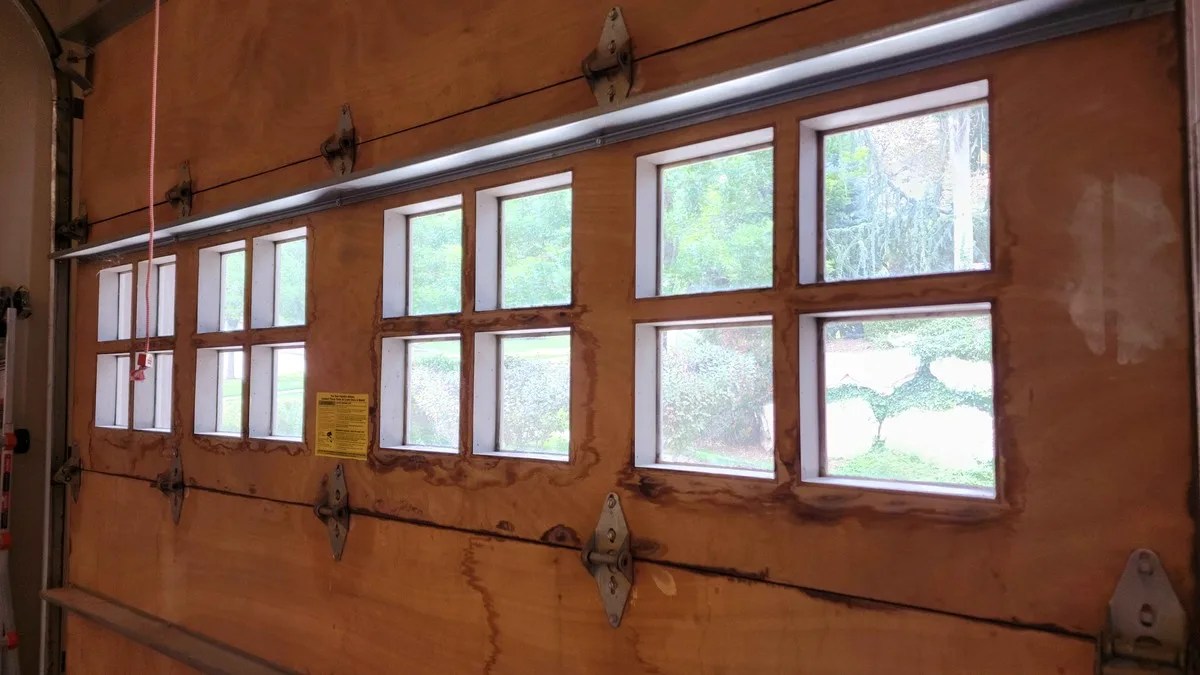
The most common design on steel sectional doors. An exterior frame sits on the outside of the cutout, an interior frame sits on the inside, and the glazing is sandwiched between them. The two frames are usually held together by screws driven from the inside, by snap-together clips, or both. Because everything is accessible from inside the garage, the window can be removed without disassembling the door.
Snap-in decorative inserts
Many windows use a decorative grille or insert (the sunburst, Stockton, Cascade, and Sherwood style patterns you see around Utah neighborhoods) that snaps over the glass. Sometimes only the decorative insert breaks, and the glass underneath is fine. Other times the glass breaks and the insert survives. Each part can often be ordered separately.
Integral windows (full-view and aluminum doors)
On full-view glass doors and many aluminum doors, the glass is set directly into the rails and stiles of the section. There is no separate window frame to unscrew. Replacing a pane may involve removing glazing beads or gaskets, and in some designs the section must come off the door. Our glass garage doors guide and aluminum garage doors guide explain how these doors are built.
Wood and carriage house doors
Wood doors often use wood muntins and glazing stops, similar to a house window. Composite and carriage house doors may use either clamp frames or built-in glazing, depending on the manufacturer. These can be repaired, but the work is more custom and finishes need to be matched. See our carriage house garage doors guide for more on these designs.
Utah Note
In newer subdivisions along the Wasatch Front, from Lehi and Saratoga Springs to Syracuse and West Haven, most garage doors are steel doors with two-piece clamp frames and a top row of windows. That is good news, because these are usually the easiest windows to replace.
Common Garage Door Window Problems
Not every window problem is a shattered pane. Here are the issues we see most often, and what each one usually means.
1. Broken or shattered glass
The most urgent problem. Tempered glass breaks into many small, blunt pieces and often falls out of the frame. Standard annealed glass breaks into sharp shards that can stay wedged in the frame and drop later. Either way, the opening needs to be cleaned up and covered.
2. Cracked glass or acrylic
A single crack may hold for a while, but cracks tend to spread with door vibration and temperature swings. Every time the door rolls over the track radius, the section flexes slightly, which works on the crack. Garage door window replacement is the better long-term fix.
3. Foggy or cloudy insulated windows
Insulated (double-pane) windows have a sealed air space between two panes. When that seal fails, moisture gets in and fogs the glass from the inside, where you cannot wipe it off. A failed seal also means the window has lost much of its insulating value. The fix is a new insulated glass unit.
4. Yellowed, hazy, or scratched acrylic
Acrylic and polycarbonate are lightweight and impact resistant, but they can scratch, haze, and yellow over time, especially on doors facing south or west under Utah’s high-altitude sun. Once the plastic is hazy, polishing rarely restores it fully.
5. Leaking, whistling, or drafty windows
If water drips down the inside of the door during storms, or you feel cold air around the window frame in January, the gasket or seal between the glazing and the frame may have shrunk, cracked, or shifted. Loose frame screws can cause the same symptoms.
6. Rattling or loose window frames
A window that buzzes or rattles every time the door moves usually has loose screws, broken clips, or a frame that has shrunk. Left alone, the vibration can crack the glass or work the frame loose completely.
7. Cracked, faded, or brittle plastic frames
Plastic window frames take a beating from UV exposure and cold. Over the years they fade, chalk, and turn brittle, and corners can crack. Replacing the frame (with new glazing at the same time) refreshes the whole look of the door.
Action Step
Walk out to your garage door and check every window from inside and out. Look for cracks, fogging between panes, loose or rattling frames, gaps in the seals, and chalky or brittle plastic. Note which windows have problems so you can describe them accurately when you call for an estimate.
What Breaks Garage Door Windows in Utah
Knowing the cause matters, because some causes point to a bigger problem with the door itself.
- Hail. Utah’s spring and summer thunderstorms can drop hail hard enough to crack glass and dent steel. If your windows broke in a hailstorm, check the panels for dents too. Our storm and hail damage guide covers what to inspect.
- Rocks, gravel, and snowplows. Winter roads are covered in gravel and grit. Plows, snow blowers, and tires can throw rocks into lower windows, and mowers and string trimmers do the same in summer.
- Balls and kids. Driveway basketball, baseball, and street hockey are the classic culprits. If your driveway is the neighborhood ballpark, impact-resistant glazing is worth considering.
- Vehicle impacts. A bumper that taps the door can flex the section enough to crack a window, even if the steel springs back. See our guide to a garage door hit by a car.
- Thermal stress. Glass that is partly shaded and partly in direct sun, or a cold pane hit with warm air, expands unevenly. On a frigid Cache Valley morning followed by bright sun, that stress can crack an already weakened pane.
- A door that slams or flexes. An unbalanced door, worn springs, or a bent section can make the door slam down or twist as it moves. That shock and flex is hard on glass. If windows keep cracking with no obvious impact, have the door checked.
- Break-ins and vandalism. Windows are the weakest point on most garage doors. A broken window near the emergency release is a security concern as well as a repair. Our garage door security guide explains why.
- Age. Frames get brittle, seals shrink, and acrylic yellows. Sometimes a window simply wears out.
Safety Warning
If your windows keep cracking without an obvious impact, the problem may be the door, not the glass. Worn springs, a door that slams shut, or a bent section put repeated stress on windows. Do not try to adjust springs or cables yourself. Torsion and extension springs are under extreme tension and can cause serious injury. Call (844) 971-3667 and have a technician inspect the door’s balance and hardware.
What to Do Right After a Garage Door Window Breaks
Here is a safe, step-by-step plan for the first hour after a window breaks.
- Keep people and pets away. Glass pieces can be anywhere in the garage, on the driveway, and inside the door’s frame. Close the house door to the garage until it is cleaned up.
- Stop using the opener for now. If the door is closed, leave it closed. Running the door can shake loose shards that are still in the frame, and as the section rolls overhead, those pieces can drop on whoever is underneath. If the door is stuck open, see the security steps below.
- Put on protection. Wear thick work gloves, closed-toe shoes, long sleeves, and safety glasses.
- Remove loose pieces carefully. Pull out only the pieces that come free easily. Do not force or pry glass that is still firmly set in the frame.
- Sweep and vacuum. Sweep up the large pieces, then vacuum (a shop vac works well) to catch slivers. Check the floor near the threshold and the driveway, where tires can pick up glass.
- Cover the opening. Tape heavy plastic sheeting or a piece of cardboard over the opening from inside. For a longer wait, a piece of thin plywood cut to fit and held with tape or screws into the window frame (not the steel skin) keeps out weather and prying eyes.
- Document the damage. Take photos of the window, the door, the cause if visible (hail on the ground, a ball, a rock), and any other damage before cleanup if possible. This helps if you file an insurance claim.
- Call for an estimate. Describe the door brand, the window style, and how many windows are damaged. A photo sent ahead helps the technician bring the right parts.
Safety Warning
Never stand under the door while it is moving if a window is broken. If you must move the door before it is repaired, clear the remaining loose glass first and keep everyone out from under the door. If the door is stuck open or will not close, do not pull the emergency release on an unbalanced door. A door with a broken spring can fall fast. Call (844) 971-3667 for help, or read our emergency garage door repair guide.
If the broken window leaves an opening close to the opener’s emergency release, take one extra step: a person outside can sometimes reach or hook the release through the opening. Covering the hole solidly, or securing the release with a shield or zip tie as a temporary measure until the window is replaced, helps keep the garage secure. Remove any temporary tie before you ever need to use the release in an emergency. Our emergency release guide explains how the red cord works.
Garage Door Window Replacement Options Compared
Once the immediate mess is handled, it is time to choose a repair path. This table compares the four main garage door window replacement options. We do not list prices because every door, window size, and glazing choice is different, but the relative effort column gives you a sense of scope.
| Option | When It Fits | Relative Effort | Watch Out For |
|---|---|---|---|
| Glass or acrylic only | Frame is intact, pane size is standard and available | Lowest | Old frames can crack when opened; seals may need replacing too |
| Full window insert (frame + glazing) | Frame is cracked, faded, or brittle, or you want a new look | Low | Must match the cutout size and section thickness exactly |
| Section replacement | Integral windows, bent or torn steel around the window, or discontinued window style | Moderate | Color and texture matching on older doors; may require spring adjustment if weight changes |
| Full door replacement | Old door, multiple damaged sections, or no matching parts available | Highest | Best when other parts (springs, rollers, opener) are also near the end of their life |
For most Utah homeowners with a steel door and one or two broken windows, a glass-only or full insert replacement is the right answer. If the steel around the window is damaged too, our garage door panel replacement guide explains how section replacement works and when it makes sense. For a broad look at repair pricing factors, see our garage door repair cost guide.
Pro Tip
If one window in a row is broken and the others are faded or yellowed, consider replacing the whole row at once. A single crystal-clear pane next to five hazy ones stands out from the street, and the labor for additional windows on the same visit is usually modest compared with a separate trip later.
Choosing Replacement Glass or Acrylic for Your Garage Door Windows
Garage door window replacement is a good moment to upgrade what goes in the frame. Here are the common glazing options and how they compare.
| Glazing Type | Strengths | Weaknesses | Best For |
|---|---|---|---|
| Standard (annealed) glass | Clear, scratch resistant, inexpensive | Breaks into sharp shards; least impact resistant | Rarely recommended today for garage doors |
| Tempered glass | Much stronger than standard glass; breaks into small, blunt pieces; scratch resistant | Can still break from hail or a hard hit; heavier than plastic | Most homes that want clear glass with better safety |
| Acrylic | Lightweight, more impact resistant than standard glass, does not shatter into shards | Scratches easily; can haze or yellow in strong sun | Budget-friendly replacements, lower-risk locations |
| Polycarbonate | Very high impact resistance; lightweight | Scratches easily; can yellow without UV protection | Driveways with ball games, hail-prone areas, rental properties |
| Insulated glass (double pane) | Better insulation; less condensation; quieter | Heavier; seal can fail and fog over time | Heated or attached garages, workshops, home gyms |
| Frosted, obscure, or seeded glass | Privacy while letting in light | Same strength as base glass type | Garages with valuables visible from the street |
| Tinted or Low-E glass | Reduces glare, heat gain, and UV fading inside the garage | Slightly darker look; availability varies by brand | South- and west-facing doors, St. George and desert climates |
Tempered glass vs acrylic in Utah
This is the question we hear most. Both are good choices, and the right one depends on your door’s exposure and how it is used.
- Choose tempered glass if you want crystal-clear windows that stay clear for decades, your door does not face constant direct sun, and the driveway is not a ballpark. Glass does not yellow and resists scratching from cleaning and blowing grit.
- Choose acrylic or polycarbonate if impacts are your main worry (kids, sports, hail-prone neighborhoods, rental homes), if you want to keep door weight down, or if you are replacing plastic windows with the same material to keep the door balanced. Look for UV-resistant plastic for sunny exposures.
Is tempered glass required in garage doors?
Building codes require safety glazing in certain hazardous locations, such as many entry and patio doors. According to the Door and Access Systems Manufacturers Association (DASMA), glazed garage doors are generally not considered a hazardous location, but certain conditions, like a garage door that also serves as a pedestrian entry, can bring them under glazing rules. The local building official makes the final call. Regardless of the code, we recommend tempered glass or impact-resistant plastic for any garage door window, because a broken pane of standard glass leaves sharp shards in the frame and on the floor.
Weight matters more than most people think
A garage door is balanced by its springs to its exact weight. Swapping one small acrylic window for tempered glass makes little difference. But changing a whole row, or several rows, from plastic to insulated glass can add enough weight to throw off the balance. An unbalanced door works the opener harder and wears springs faster. Clopay’s own replacement glass guide flags door balance and spring adjustment as a reason to involve a professional when heavier glass goes in. After any large glazing change, the door should pass a balance test. Our balance test guide shows how to check it safely.
Safety Warning
If a glazing change throws off your door’s balance, the fix is a spring adjustment or new springs sized for the new weight. That is a professional job. Garage door springs store enough energy to cause severe injuries. Never loosen, wind, or remove springs yourself. Read why spring work is not a DIY job before you touch any part of the spring system.
Best Garage Door Window Choices by Utah Region
Utah’s climate varies a lot from one end of the state to the other, and that changes which windows hold up best.
| Region | Main Window Threats | Smart Choices |
|---|---|---|
| Wasatch Front (Ogden to Provo) | Spring and summer hail, winter gravel and plows, inversion-season condensation | Tempered glass or UV-stable polycarbonate; insulated glass on attached garages |
| Cache Valley (Logan, Smithfield, Hyrum) | Deep cold snaps, thermal stress, condensation on single-pane glass | Insulated glass for heated or attached garages; tight seals and gaskets |
| Mountain towns (Park City, Heber, Eden) | Heavy snow against lower sections, intense UV at altitude, big temperature swings | Windows in upper sections only; tempered or Low-E glass; UV-stable frames |
| St. George and Washington County | Extreme heat, strong UV, dust and blowing sand | Tinted or Low-E tempered glass; avoid non-UV-stable acrylic on sunny exposures |
| Tooele and the west desert | Wind-driven grit, salt air near the lake, temperature extremes | Tempered glass for scratch resistance; quality gaskets to keep dust out |
Utah Note
High altitude means stronger UV. Many Utah homes sit at 4,000 to 7,000 feet or higher, and that extra sun exposure is why plastic windows and frames on south- and west-facing doors tend to fade and haze faster here than at sea level. If your current acrylic windows yellowed within a few years, tempered glass or UV-stable polycarbonate is worth considering for the replacement.
Matching Your Door: Brand, Size, and Style
A garage door window replacement only looks right if the new window matches the old ones and fits the cutout exactly. Here is what has to line up:
- Door brand and model. Window frames are designed for a specific manufacturer’s cutouts and section thickness. A frame from one brand rarely fits another brand’s door properly. Our guide on how to find your garage door model number shows where to look.
- Window size. Common garage door window sizes vary by brand and door design, and the difference between two sizes can be small. Measure the opening, not just the glass.
- Section thickness. Non-insulated, single-layer doors are thinner than insulated doors. The interior frame has to reach across the full thickness to clamp properly.
- Frame color. Frames usually come in white and a few standard colors. If your door has been painted, the new frame may need to be painted to match.
- Decorative insert design. Sunburst, arched, square grids, and straight-bar inserts all vary by brand. If your design is discontinued, the closest match may differ slightly, which is another reason to consider replacing a whole row.
- HOA rules. Some Utah HOAs regulate window styles, tints, and frosted glass on garage doors. If you are changing the look, check first. See our HOA garage door rules guide.
What if the window is discontinued?
Manufacturers update window designs over time, and older styles do get discontinued. When an exact match is not available, the options are a close substitute (sometimes replacing the whole row so they all match), replacing the windowed section with a new section in a current style, or, on an older door with other problems, moving to a new door. A local technician who works with several brands can often find options that a big-box parts counter cannot.
Pro Tip
Thinking about adding windows rather than replacing them? Some doors can have window inserts added to existing solid sections, while others need a new windowed section. Our garage door window inserts guide covers styles, privacy options, and adding windows to an existing door.
DIY vs Professional Garage Door Window Replacement
Garage door window replacement is one of the few garage door repairs that a handy homeowner can sometimes do. But it has limits, and some situations should always go to a professional.
Generally reasonable for a careful homeowner
- Cleaning up broken glass safely and covering the opening
- Tightening loose window frame screws from inside the garage
- Replacing a snap-in decorative insert that matches exactly
- Swapping a single pane of matching acrylic or glass in a standard two-piece clamp frame, with the door closed and the opener unplugged
Call a professional when
- The window is part of the section (full-view, aluminum, or many wood doors)
- The steel or wood around the window is bent, torn, or cracked
- You are changing several windows to a heavier glazing, which can affect door balance and springs
- The door has trouble opening or closing, slams shut, or looks crooked
- The window is in the top section near the opener bracket, where damage may also affect the bracket and reinforcement strut
- You cannot identify the brand, model, or exact window size
- The door is commercial or oversized
Our DIY vs professional repair guide lays out which garage door jobs are safe for homeowners and which are not.
Safety Warning
Never remove a door section, hinges, or brackets to get at a window. Sections are part of a balanced, spring-loaded system, and the bottom brackets connect to cables under high tension. Removing hardware on a door that is under spring tension can cause the door to drop or the cables to whip loose. Leave section removal and anything involving springs, cables, or bottom brackets to a trained technician. Call (844) 971-3667.
What a Professional Garage Door Window Replacement Looks Like
Every door is a little different, but here is what a typical professional garage door window replacement visit includes when you work with Advanced Door.
- Inspection and identification. The technician identifies the door brand, model, section thickness, and window type, and checks the steel around the window for damage.
- Whole-door check. Because a broken window can be a symptom of a door problem, the technician looks at balance, springs, cables, rollers, and hinges and tells you honestly if anything else needs attention, or if nothing does.
- Options and a written estimate. You get clear choices (glass only, full insert, section) and glazing options, with a written, itemized estimate and no hidden fees.
- Safe removal. With the door secured and the opener disconnected, the interior frame is released and the remaining glass and old seals are removed. Glass is cleaned up thoroughly, including inside the frame channels.
- Installation. The new glazing and frame are set with the correct gaskets and fastened evenly so the frame clamps tightly without cracking. Decorative inserts are installed and aligned.
- Balance and function test. If the window change affects door weight, the balance is checked and the springs are adjusted as needed. The door is run through several full cycles and the safety reversal is tested.
- Cleanup. Old glass and parts are hauled away, and you get a quick walkthrough of what was done.
Simple glass or insert swaps can often be done in a single visit when parts are on hand. Brand-specific frames, insulated glass units, and replacement sections may need to be ordered. Our repair timeline guide explains what affects how long different repairs take.
Action Step
When you call, have these ready: the door brand (from the label inside the door), the number of damaged windows, whether the glass is clear, frosted, or plastic, and a photo of the window from inside the garage. That lets us confirm parts and give you a faster, more accurate estimate. Call (844) 971-3667.
Foggy Garage Door Windows, Condensation, and Leaks
Not all moisture on a garage door window means the window has failed. Here is how to tell the difference.
Condensation on the inside surface
If moisture forms on the inside face of a single-pane window on cold mornings and you can wipe it off, that is condensation, not a broken window. Warm, humid air in the garage (from a wet car, a running dryer, or a heated workshop) hits the cold glass and condenses. It is common in Utah during winter inversions. Better ventilation, insulated glass, and keeping snowmelt from pooling on the floor all help. DASMA notes that condensation is more of a concern on the glazing than on the door panels themselves. Our garage door condensation guide covers causes and fixes in detail.
Fog between the panes
If an insulated window is foggy and you cannot wipe it off from either side, the seal around the sealed glass unit has failed and moisture is trapped between the panes. That will not go away on its own, and the window has lost much of its insulating value. The fix is a replacement insulated glass unit or a full insert. If you heat your garage or use it as a gym or workshop, it is worth keeping those windows insulated. See our insulated garage doors guide and R-value guide.
Water leaking around the frame
Water that runs down the inside of the door during storms usually means the frame gasket has shrunk or shifted, or the frame screws have loosened. Tightening the frame evenly sometimes solves it. If the gasket is cracked or the frame is warped, the insert needs to be replaced. Leaks along the sides and bottom of the door are a different issue; see our weatherstripping replacement guide.
| What You See | Likely Cause | What to Do |
|---|---|---|
| Moisture on the inside face, wipes off | Normal condensation | Improve ventilation; consider insulated glass |
| Fog between panes, will not wipe off | Failed insulated glass seal | Replace insulated glass unit or insert |
| Water dripping down inside the door in storms | Shrunk or shifted gasket, loose frame | Tighten frame; replace gasket or insert |
| Whistling or draft around the window | Gaps between glazing and frame | Reseat or replace the insert |
| Rattle when the door moves | Loose screws or broken clips | Tighten or replace the frame |
Hail, Vandalism, and Insurance
If a storm, a vehicle, or vandalism broke your garage door windows, your homeowners insurance may cover some or all of the repair, depending on your policy and deductible. Coverage varies widely, so check with your insurer before assuming either way.
- Document everything with dated photos before cleanup, including the cause if visible.
- Check the whole door. Hail that breaks windows often dents panels too, and those dents belong in the same claim.
- Get a written, itemized estimate that lists the windows, glazing type, and any other damage.
- If a driver hit your door, their auto insurance may be the right place to start.
Our garage door and home insurance guide explains how claims typically work and what to ask your agent.
How to Protect Your Garage Door Windows
You cannot stop every hailstorm, but you can make garage door windows last much longer.
- Choose the right glazing for the spot. Impact-resistant polycarbonate or tempered glass for driveways that see ball games or hail; UV-stable materials for sunny exposures.
- Keep the door balanced. A door that slams or twists stresses every window. Annual tune-ups catch worn springs and rollers early. See our garage door maintenance schedule.
- Clean gently. Use mild soap and water with a soft cloth. Avoid abrasive pads, and avoid ammonia-based glass cleaners on acrylic and polycarbonate, which can cloud some plastics. Our garage door cleaning guide has the full routine.
- Check frames and seals each fall. Tighten loose screws, look for cracked gaskets, and replace brittle frames before winter. Our fall maintenance checklist covers it.
- Watch the snow blower and plow line. Aim the chute away from the door, and keep lower windows clear of piled snow and ice.
- Park carefully. A parking aid or tennis ball on a string keeps bumpers off the door.
- Think about security. Frosted or obscure glass keeps tools and vehicles out of view from the street, and a shield on the emergency release prevents fishing through a window. Our security guide has more ideas.
Utah Note
Utah’s hail season usually runs from late spring through summer, with the strongest storms along the Wasatch Front and in northern valleys. If a storm warning is in the forecast, pulling vehicles and outdoor equipment inside keeps them safe, but the door itself still takes the hit. Impact-resistant glazing is the best long-term protection for the windows.
How Advanced Door Helps With Garage Door Window Replacement
Whether you have one cracked pane or a full row of hail-damaged windows, our team can help with:
- Fast window repairs. Glass, acrylic, polycarbonate, and insulated glass replacement, plus full window inserts and decorative grilles.
- Section and panel replacement. When the window is built into the section or the steel around it is damaged.
- Honest diagnostics. If windows keep cracking, we check balance, springs, and hardware and tell you plainly what is and is not needed.
- Balance and spring adjustment. When a glazing change adds weight, we set the door up correctly so it runs smoothly and safely.
- Lifetime warranty springs. Built for two to three times the cycle count of standard springs.
- Free estimates, always. No pressure and no hidden fees.
Find your local team: Ogden garage door repair at (801) 430-9021, Logan and Cache Valley at (435) 363-4929, and Draper at (801) 967-8998. We also serve Provo and Utah County, Park City and Summit County, St. George and Washington County, Layton and Davis County, and the rest of the state. For an overview of everything we fix, see our Utah garage door repair guide.
Call (844) 971-3667 today for a free estimate. Current offers: $100 off any new door or 10% off any service call (offers cannot be combined).
Frequently Asked Questions About Garage Door Window Replacement
Can you replace just the glass in a garage door window?
Usually, yes. On most steel garage doors the glass is clamped between an interior and exterior frame, so the frame can be opened from inside and the pane replaced without removing the door section. If the frame is cracked or brittle, it is often better to replace the whole window insert at the same time.
How long does garage door window replacement take?
A simple glass or insert swap with parts on hand can often be done in a single visit. Brand-specific frames, insulated glass units, and replacement sections may need to be ordered first, which adds time before the installation visit.
Is acrylic or tempered glass better for garage door windows?
Tempered glass stays clear and resists scratching and yellowing, which makes it a strong choice for most Utah homes. Acrylic and polycarbonate are lighter and more impact resistant, which makes them better for driveways with ball games, hail-prone areas, and rental homes. Use UV-stable plastic on sunny exposures.
Why are my garage door windows foggy?
If the fog wipes off the inside surface, it is condensation from warm, humid air in the garage meeting cold glass. If the fog is between the two panes of an insulated window and will not wipe off, the seal has failed and the insulated glass unit needs to be replaced.
Can I run my garage door with a broken window?
It is best not to until the loose glass is cleared and the opening is covered. Moving the door can shake loose shards that fall on anyone underneath. If you must use the door, clear the remaining glass first and keep everyone out from under it.
Will replacing windows affect my garage door springs?
Replacing one window with the same material will not. Changing several windows to a heavier glazing, such as from acrylic to insulated glass, can add enough weight to affect the door’s balance. In that case the springs should be checked and adjusted by a professional.
Does homeowners insurance cover broken garage door windows?
It depends on your policy, the cause, and your deductible. Hail, storm, vehicle, and vandalism damage are often the types of losses insurers look at. Document the damage with photos and get a written, itemized estimate, then check with your insurance agent.
What if my garage door window style is discontinued?
Options include a close substitute (often replacing the whole row so the windows match), a new section in a current window style, or, on an older door with other problems, a new door. A technician who works with several brands can usually find the best match for your door.
References: DASMA, Garage Door Glass and the Law (when glazing codes do and do not apply to garage doors) and Clopay, Replacing Garage Door Window Glass (glass types, measuring, and why heavier glass can require spring adjustment).
Get a Free Estimate from Advanced Door
Broken, cracked, or foggy garage door windows? Get fast, honest window replacement and a full door safety check from a local Utah team.
Serving Ogden, Salt Lake City, Provo, Park City, Logan, and all of Utah
Call for a free estimate. No pressure, no hidden fees.
Current offers: $100 off any new door or 10% off any service call
(Offers cannot be combined)