
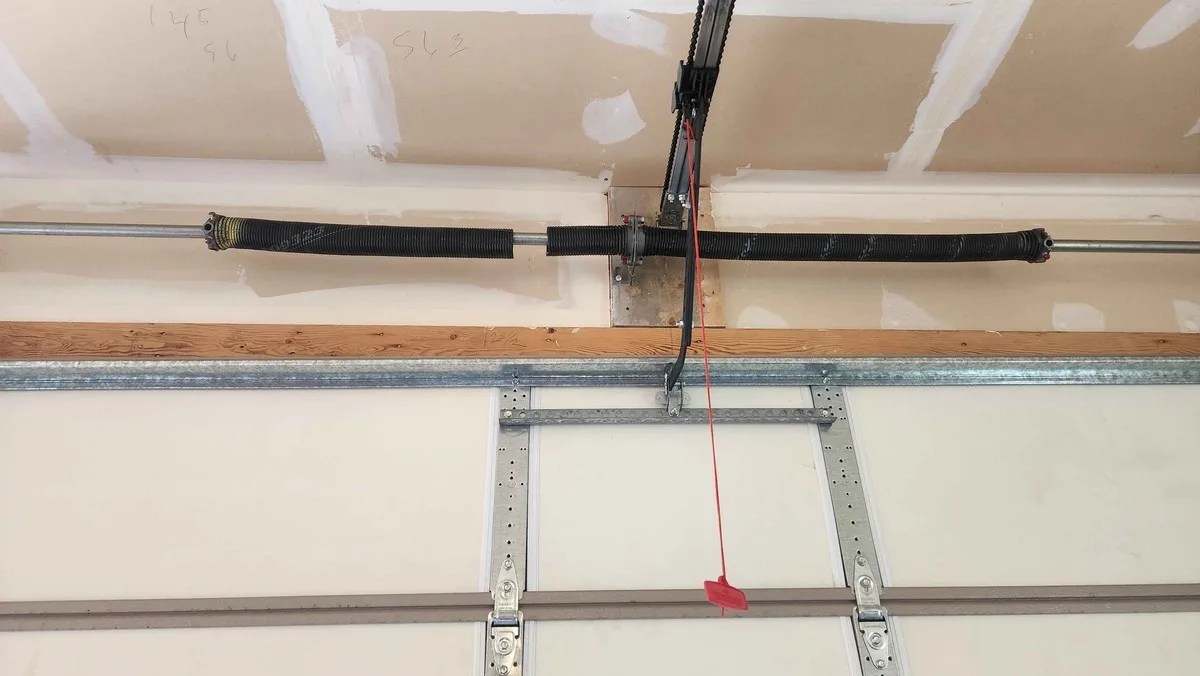
Broken garage door spring vs cable: how can you tell? A broken torsion spring usually shows a visible gap in the coils on the bar above the door, often follows a loud bang, and leaves the door extremely heavy so the opener can only lift it a few inches. A broken or loose cable usually leaves the door hanging crooked, with a cable dangling near a bottom corner or unwound from the drum at the top. Both are high-tension repairs that should only be handled by a trained technician. Advanced Door is Utah’s #1 rated garage door company: family owned since 1994, 4.9 stars, 30,000+ five-star reviews, and the only company in Utah offering a lifetime warranty on parts and labor. We provide same-day garage door repair across Utah. Call (844) 971-3667 for a free estimate.
Last updated: October 2026
Safety Warning
Do not touch the springs, cables, drums, or bottom brackets. Every part in this guide is connected to a spring system that holds hundreds of pounds of stored force. Look from a few feet away, take photos, and keep people, pets, and cars out from under the door. Do not run the opener again and do not try to lift a crooked or heavy door by hand. If the door is stuck open or hanging unevenly, call a professional at (844) 971-3667.
You hit the button and the door does something wrong. Maybe it groans, lifts six inches, and stops. Maybe it rises with one side higher than the other. Maybe you heard a crack from the garage last night and the door has not moved right since. Now you are standing in the garage trying to figure out what actually broke.
For most Utah homeowners, the answer comes down to two parts: the springs or the cables. Understanding broken garage door spring vs cable symptoms helps you describe the problem on the phone, know whether the door is safe to leave, and spot a quote that does not match what you are seeing. The two parts work as a team, so their symptoms overlap, and one failure often causes the other.
This guide walks you through the visual signs, the sounds, and the door behavior that point to each part. It also covers why springs and cables fail more often in Utah’s cold snaps and salty winters, what each repair typically costs, and what you can safely do while you wait for a technician. Everything here is observation only. You never need to touch a spring or cable to figure out which one failed.
Need help now? Call (844) 971-3667. We serve Ogden and Weber County at (801) 430-9021, Logan and Cache Valley at (435) 363-4929, and Draper and the south valley at (801) 967-8998.
Table of Contents
- 1. Broken Garage Door Spring vs Cable: The Quick Answer
- 2. Stay Safe First: What to Do in the First Five Minutes
- 3. How Springs and Cables Work Together
- 4. Signs of a Broken Garage Door Spring
- 5. Signs of a Broken or Loose Garage Door Cable
- 6. The Sound Test: What You Heard Tells You a Lot
- 7. Symptom-by-Symptom Diagnostic Table
- 8. When It Is Both: Why One Failure Causes the Other
- 9. Torsion vs Extension: How the Diagnosis Changes
- 10. Spring vs Cable Repair Cost in Utah
- 11. Why Springs and Cables Fail in Utah
- 12. Can You Still Use the Door?
- 13. Why Neither Repair Is a DIY Job
- 14. How to Prevent the Next Failure
- 15. When to Call Advanced Door
- 16. Frequently Asked Questions
Broken Garage Door Spring vs Cable: The Quick Answer
If you only have a minute, this comparison covers the most reliable differences. Look at the door from a safe distance and match what you see.
| What You Notice | Broken Spring (Most Likely) | Broken or Loose Cable (Most Likely) |
|---|---|---|
| Loud bang from the garage | Very common. Often sounds like a gunshot or firecracker | Possible, but more often a snap, whip, or rattle |
| Door position | Usually level, but very heavy | Often crooked, one side lower than the other |
| Opener behavior | Strains, hums, lifts a few inches, then stops or reverses | May lift, but the door binds, tilts, or jams |
| What you can see | Gap in the coils on the bar above the door (torsion), or a stretched or hanging spring along the track (extension) | Cable dangling near a bottom corner, slack, or unwound from the drum at the top |
| Door weight by hand (do not test) | Feels like dead weight | Uneven, one side drags or drops |
| Typical repair path | Replace springs (usually both) | Replace or re-seat cables, inspect drums and bottom brackets |
The catch is that the two problems often show up together. A broken spring can leave the cables slack, and slack cables can jump off their drums. That is why a technician always checks the whole system, not just the part that looks broken. We cover combination failures in section 8.
Pro Tip
Take two photos before you call anyone: one of the area above the door opening (where torsion springs live) and one of each bottom corner of the door. Those three pictures answer most of the spring vs cable question for a technician, and they help you compare quotes later.
Stay Safe First: What to Do in the First Five Minutes
Before you diagnose anything, make the garage safe. The steps are the same whether the spring or the cable failed.
- Stop using the opener. Running it against a broken spring or loose cable can strip the opener gear, bend the door, pull the door off the track, or yank a cable off its drum.
- Clear the area. Keep kids, pets, and vehicles away from the door opening and away from the springs and tracks.
- Leave the door where it is. If it is closed, keep it closed. If it is open or partly open, do not try to push it down or lift it up.
- Do not pull the red emergency release if the door is open. With a broken spring, the door can free-fall the moment it is disconnected from the opener. Read our emergency release guide before you touch that cord.
- Look, do not touch. Use a flashlight from a few feet away. Check above the door, along both horizontal tracks, and at both bottom corners.
- Take photos and call. A clear description and a few pictures help the technician bring the right parts the first time.
Safety Warning
Bottom brackets, cable drums, and set screws are all under spring tension, even when something is already broken. Loosening a bottom bracket bolt or a drum set screw can release that tension suddenly and cause severe hand, arm, or head injuries. These parts are for trained technicians only.
If your door is stuck open and you need to secure the house tonight, see our emergency garage door repair guide for what to do while you wait.
How Springs and Cables Work Together
A garage door is heavy. A typical two-car steel door can weigh well over 100 pounds, and insulated, wood, or oversized doors weigh more. You can see how weight varies by door type in our guide on how much a garage door weighs. The opener is not built to lift that weight on its own. The springs do the heavy lifting.
Here is the basic chain of force:
- Springs store the energy. Torsion springs twist around a metal bar above the door. Extension springs stretch along the horizontal tracks on each side.
- Cables carry that energy to the door. Each cable runs from a bottom bracket at the lower corner of the door up to a drum (torsion systems) or over a pulley (extension systems).
- Drums or pulleys guide the cables. On torsion systems, cable drums at each end of the torsion bar wind the cable as the door rises. On extension systems, pulleys route the cable from the spring to the door.
- The opener just guides and controls. On a balanced door, the opener only needs a small push. That is why a broken spring makes an opener strain or quit.
When a spring breaks, the door loses its counterbalance and becomes dead weight. When a cable breaks, one side of the door loses its connection to the springs and that side drops or drags. That single difference explains most of the symptoms below. For a full walkthrough of every component, see how a garage door works.
Signs of a Broken Garage Door Spring
Springs are the part most likely to fail on any garage door. Most standard springs are rated for a set number of open-and-close cycles, and once they reach the end of that life, they snap. These are the clearest signs.
1. A visible gap in the torsion spring
Look at the metal bar running across the top of the door opening. A healthy torsion spring is a tight, continuous coil. A broken one has a clear separation somewhere along its length, often an inch or more, where the coil has split into two pieces. On doors with two springs, one may look normal while the other is clearly separated.
2. The door is suddenly very heavy
With a working spring, a balanced door feels light. With a broken spring, it feels like it is bolted to the floor. Do not test this by lifting the door yourself, but if you or someone else already noticed the door was heavy before the problem got worse, that points strongly to a spring.
3. The opener strains, then stops
Many openers will try to lift a door with a broken spring, raise it a few inches, and then stop or reverse because the safety force limit is triggered. You may hear the motor working hard or humming. Our guide to an opener humming but not moving covers how a broken spring compares to other causes of this symptom.
4. The door comes down too fast
If the spring broke while the door was open, the door may slam down or close much faster than normal because nothing is holding back its weight. This is one of the most dangerous situations on this list.
5. A stretched or hanging extension spring
On older or lighter doors with extension springs, look along the horizontal tracks on each side. A broken extension spring may hang loose, appear stretched out of shape, or sit in two pieces held only by its safety cable. If one extension spring breaks, the door often lifts unevenly, which can look like a cable problem. More on that in section 9.
6. The cables suddenly look slack
When a torsion spring breaks, the cables lose their tension. They may hang loose or even fall off the drums. Slack cables are often the first thing homeowners notice, even though the spring is the root cause.
For the earlier warning signs that show up before a spring breaks, read 7 signs your garage door spring is about to break. If you have already confirmed a broken spring, our step-by-step my garage door spring broke guide covers exactly what to do next.
Signs of a Broken or Loose Garage Door Cable
Cables are braided steel wire, and they usually fail more gradually than springs. Fraying, rust, and wear at the bottom bracket build up over time until one strand after another gives way. Sometimes the cable does not break at all. It simply comes off the drum or pulley. Here is what to look for.
1. The door hangs crooked
This is the classic cable symptom. One side of the door sits higher than the other, the bottom edge is no longer parallel to the floor, or the door is tilted in the opening. When one cable stops carrying its share of the load, that side sags. Our guide to a crooked garage door covers the other causes of an uneven door.
2. A cable is dangling or lying on the floor
Look at both bottom corners of the door. Each should have a taut cable running straight up from the bottom bracket. A snapped cable may hang loose, curl on the floor, or swing free near the track.
3. The cable is unwound or off the drum
On torsion systems, look at the drums at each end of the bar above the door. A healthy cable sits neatly in the drum grooves. A loose cable may be bunched up, wrapped outside the grooves, or hanging off the drum entirely. Our cable drum guide shows what these problems look like.
4. Visible fraying or rust
If the cable did not fully break, you may see broken strands sticking out, a thinned section, or heavy rust near the bottom bracket where moisture, snowmelt, and road salt collect. A frayed cable is a broken cable that has not happened yet.
5. The door jams, binds, or comes off the track
When one side loses support, the door can twist in its tracks. Rollers may pop out and the door can wedge itself in place. If you see rollers outside the track, read our off-track garage door guide and do not try to force the door back.
6. The opener lifts one side faster than the other
With a loose cable, the opener may still move the door, but the door rises unevenly, jerks, or shudders. If you see that kind of movement without a crooked resting position, our guide to a door that jerks or moves unevenly is a good next read.
For a deeper look at cable failures specifically, see garage door cable snapped? what to do and what happens if a garage door cable breaks.
Safety Warning
A door hanging by one cable can shift or fall without warning. Do not stand under it, do not drive a car under it, and do not try to pull it straight. If the door is open and crooked, block off the area and call (844) 971-3667.
The Sound Test: What You Heard Tells You a Lot
Many homeowners hear the failure before they see it. If you heard something, the type of sound is one of the best clues you have.
- A single loud bang, like a gunshot, with the door closed and nobody using it: almost always a torsion spring. Springs often break while sitting under full tension with the door down.
- A sharp snap or whip sound during operation, followed by a crooked door: most often a cable, or an extension spring on one side.
- A metallic clatter or rattle, then the door stops: a cable coming off a drum or pulley, or a broken extension spring hitting its safety cable.
- A loud groan or grinding from the opener, with the door barely moving: the opener fighting a door with no counterbalance, which points to a broken spring.
- No sound at all, just a door that suddenly acts wrong: could be either. Look for a spring gap first, then check the cables.
Not every noise means something broke. Squeaks, pops, and grinding can come from rollers, hinges, or dry parts. If your door still works but sounds bad, start with our garage door noise diagnosis guide.
Symptom-by-Symptom Diagnostic Table
Use this table to match what you are seeing to the most likely cause. It is a starting point, not a final diagnosis. A technician will confirm by checking the full system.
| Symptom | Most Likely Cause | Also Possible | Safe to Use the Door? |
|---|---|---|---|
| Loud bang, door now very heavy | Broken torsion spring | Both springs broken | No |
| Visible gap in coil above door | Broken torsion spring | Spring broken near the winding cone | No |
| Door crooked, cable hanging at a corner | Snapped cable | Failed bottom bracket | No |
| Cable bunched or off the drum | Slack cable from a spring break or obstruction | Worn drum or loose set screw | No |
| Door crooked on an extension spring system | Broken extension spring on one side | Snapped cable or worn pulley | No |
| Opener lifts a few inches, then stops | Broken spring | Opener force setting or obstruction | No |
| Door slams down when closing | Broken spring | Opener disconnected | No |
| Frayed or rusted cable, door still level | Cable near failure | Bottom bracket corrosion | Limit use, book a repair |
| Door jerks but stays level | Worn rollers or dry tracks | Early spring imbalance | Usually, schedule service |
| Rollers out of the track | Off-track door | Cable failure on one side | No |
Action Step
Write down three things before you call: what you heard, how the door looks right now (open, closed, crooked, level), and what type of springs you have (one bar above the door, or springs along the side tracks). That short list lets a technician give you a much more accurate price range on the phone.
When It Is Both: Why One Failure Causes the Other
Here is the part most online guides skip. In real service calls, springs and cables often fail together, and the order matters.
A broken spring can throw the cables
When a torsion spring snaps, the cable drums lose their tension. If anyone then runs the opener, the door may lift unevenly, and the slack cables can unwind and jump off the drums. What started as a spring problem becomes a spring and cable problem. This is the most common reason we see both parts on one invoice.
A worn cable can shock-load the spring
When a cable snaps under load, the door can drop or twist suddenly. That jolt puts extra stress on the springs and the rest of the hardware. A spring that was already near the end of its life may break soon after.
An obstruction can create slack
If the door hits something on the way down, or the bottom seal is frozen to the concrete on a cold Utah morning and the opener tries to lift it anyway, the cables can go slack and come off the drums. In that case, nothing is broken yet, but the door still needs a technician to re-seat the cables safely. Our guide to winter garage door problems in Utah explains how to avoid this.
This is why a good technician inspects springs, cables, drums, and bottom brackets together, even if only one part looks broken. Replacing a spring and leaving a frayed cable in place is a quick way to get a second service call a few weeks later.
Pro Tip
When springs are being replaced, ask whether the cables are worn. Cables are usually inexpensive compared to the labor of a second visit, and many technicians recommend replacing them at the same time when they show rust or fraying.
Torsion vs Extension: How the Diagnosis Changes
Your spring type changes what a crooked door means. If you are not sure which system you have, our torsion vs extension springs guide explains how to tell at a glance.
Torsion spring systems
Torsion springs sit on a single bar above the door. Because that bar turns both cable drums together, a broken torsion spring usually leaves the door level but very heavy. If a torsion door is crooked, the cause is most often a cable problem, either a snapped cable or a cable that came off its drum. Most modern Utah homes have torsion systems.
Extension spring systems
Extension springs work in pairs, one on each side, and each side lifts its own half of the door. If one extension spring breaks, that side loses its lift and the door can hang crooked, just like a cable failure. So on an extension system, a crooked door could be either a broken spring or a broken cable. Look along each horizontal track for a stretched, separated, or hanging spring. Our extension springs guide covers these systems in detail.
Safety Warning
Extension springs must have safety cables running through the center of each spring. Without them, a broken extension spring can fly across the garage. If you have extension springs and do not see a safety cable inside each one, have the system inspected. Many homeowners with extension springs choose to convert to a torsion system for this reason.
Broken Garage Door Spring vs Cable Repair Cost in Utah
These are general industry ranges for parts and labor in Utah during regular hours. They are not quotes. Your real cost depends on your door size and weight, spring type and quality, and whether more than one part needs work. Nights, weekends, and holidays may add a premium at many companies.
| Repair | Typical Range (Industry) | What Drives the Price |
|---|---|---|
| Torsion spring replacement (single) | $150 – $350 | Door weight, spring size, spring quality |
| Torsion spring replacement (pair) | $200 – $500 | Most technicians replace both springs together |
| Extension spring replacement (pair) | $150 – $350 | Safety cables, pulley condition |
| Cable replacement (one side) | $100 – $200 | Cable length, drum condition |
| Cable replacement (both sides) | $150 – $350 | Usually recommended when one side fails |
| Spring and cable combination repair | $250 – $500 | Number of parts, door weight |
| Door off track (simple re-seat) | $125 – $200 | Whether tracks or rollers are bent |
| Off track with bent track or cable damage | $200 – $500+ | Track replacement, panel damage |
For full breakdowns, see our garage door spring replacement cost guide and the Utah garage door repair cost guide.
A few things to keep in mind when you compare prices:
- Spring quality varies widely. Standard builder-grade springs are the cheapest to install but wear out the soonest. Higher-cycle springs cost more up front and last much longer.
- One price for springs and cables is often the better deal. Doing both in one visit avoids a second service call.
- Ask what is included. A low spring price that leaves out cables, rollers, or a balance adjustment can turn into a larger bill on site.
- Get the parts named on the estimate. If two quotes look very different, read our guide on why garage door estimates differ.
Utah Note
Advanced Door installs lifetime warranty springs rated for two to three times the cycle count of standard springs. They cost more than the cheapest option, but for a Utah family that uses the garage as the front door, they can mean years without another spring call. We always give a free estimate first, so you know the price before any work starts. Call (844) 971-3667.
Why Springs and Cables Fail in Utah
Springs and cables wear out everywhere, but Utah’s climate and driving habits add some extra stress. Knowing these local factors helps you understand why your door failed and how to keep it from happening again.
Cold snaps and first freezes
Spring steel that is already worn tends to give out on cold mornings. In Utah, the first hard freezes usually arrive between late October and November, and that is when we see spring calls climb. Cache Valley, Morgan, Park City, and other high-elevation areas feel it first, but the whole Wasatch Front gets its share.
Road salt and snowmelt
Every winter, cars track salty slush into Utah garages. That brine pools near the bottom corners of the door, right where the cables attach to the bottom brackets. Over a few seasons, it rusts the cable ends and the brackets, which is one of the most common reasons we replace cables. Our garage door rust guide covers how to slow this down.
Great Salt Lake air
Homes in Davis County, Tooele County, and the western Salt Lake Valley deal with salty air blowing off the lake. That speeds up corrosion on exposed steel parts, including cables, drums, and spring coils. If you live in these areas, a yearly inspection matters more. See our Layton and Davis County page for local details.
Big temperature swings
Utah can swing from below freezing at night to warm afternoons in fall and spring. That constant expansion and contraction adds fatigue to spring steel and loosens hardware over time.
Heavy, insulated doors
Many Utah homeowners choose insulated doors for winter comfort, and many newer homes have oversized doors for trucks. Heavier doors put more load on springs and cables. If your door was upgraded but the springs were not sized to match, they will wear out faster.
The garage is the front door
In most Utah households, the garage is the main entrance. Several trips a day add up to a lot of cycles every year, which is why builder-grade springs in newer subdivisions from Lehi to Layton often fail within the first several years. Our guide on how long garage door springs last explains how cycle ratings work.
Utah Note
If your springs are original to a home built in the last decade, and your family uses the garage several times a day, it is worth having them checked before winter. Replacing them on your schedule in October is a lot easier than replacing them on a snowy morning in January. Our fall maintenance checklist covers the rest of the pre-winter list.
Can You Still Use the Door?
Short answer: if a spring or cable is broken, do not use the door until it is repaired. Here is how to think about the most common situations.
- Door closed, spring broken, door level: Leave it closed. This is usually the safest situation, and it can often wait for a daytime appointment if your car is not trapped inside. If you need to get a car out, call a technician rather than forcing the door.
- Door closed, cable loose or broken: Leave it closed and do not run the opener. Running it can pull the door crooked and off the track.
- Door open or partly open, spring broken: Keep everyone clear. Do not pull the emergency release, because the door may fall. Call for same-day service.
- Door open and crooked: This is the highest-risk situation. Block off the opening and call right away.
- Frayed cable, door still works normally: Limit use and book a repair soon. A frayed cable is close to failing.
If you absolutely must open a door with a broken spring, read how to open a garage door with a broken spring and cable first, and understand the risks. In most cases, the safer choice is to wait for a technician. Many repairs are finished the same day. See how long garage door repair takes.
Safety Warning
Never use a vise grip, clamp, or block of wood to hold a door with a broken spring or cable in place and then walk under it. Improvised supports can slip. Never try to wind, unwind, or tighten a spring, and never loosen a bottom bracket or drum set screw.
Why Neither Repair Is a DIY Job
Online videos make spring and cable work look simple. It is not. The Door and Access Systems Manufacturers Association (DASMA) advises homeowners that cables attached to the spring system should be replaced only by a trained technician because of the high spring tension involved, and it recommends replacing both springs on a two-spring door even if only one is broken.
Here is why these repairs go wrong for homeowners:
- Stored energy: A wound torsion spring holds enough force to break bones. Winding bars that slip can cause serious injuries.
- Hidden tension: Bottom brackets and drums can still be under load even when a spring looks broken.
- Wrong parts: Springs are sized to the door’s weight and height. The wrong wire size or length leaves the door out of balance and wears out the opener. Our spring color code guide shows how many variables are involved.
- Cable routing: Cables must be wound evenly on both drums with matching tension, or the door will lift crooked and the cables will jump again.
- Final balance: After any spring or cable repair, the door needs to be balanced and tested. Our balance test guide explains what a balanced door looks like.
Some garage door tasks are perfectly safe for homeowners, like cleaning the tracks, changing remote batteries, or lubricating rollers. For the full list of safe vs professional jobs, see safe DIY garage door repairs vs jobs for a pro and can you replace garage door springs yourself.
How to Prevent the Next Failure
You cannot make springs and cables last forever, but you can push the next failure further out and catch problems before they leave you stranded.
A monthly two-minute look (no touching)
- Look at the torsion spring for gaps, heavy rust, or uneven coil spacing.
- Look at both cables from the bottom bracket up. Check for frayed strands, kinks, or rust.
- Watch the door open and close. It should move smoothly and stay level the whole way.
- Listen for new bangs, scraping, or grinding.
- Check that the cables sit neatly in the drum grooves at the top.
Seasonal habits that help in Utah
- Rinse salty slush away from the bottom corners of the door during winter.
- Keep the bottom seal from freezing to the floor so the opener never pulls against a stuck door.
- Lubricate the springs, hinges, and rollers with a garage door lubricant. Our lubrication guide covers what to use and where.
- Run the auto-reverse and balance checks a few times a year.
Professional tune-ups
A yearly professional inspection catches worn cables, tired springs, and loose hardware before they fail. A technician can also confirm your springs are sized correctly for your door. See our garage door tune-up guide and the full Utah garage door maintenance schedule.
Upgrade the springs once
The single biggest step most homeowners can take is to replace standard springs with higher-cycle springs. You pay a bit more once, and you avoid repeating the same repair every few years. For Utah households that use the garage as the main entrance, it is usually the better long-term value.
Action Step
Next time you have the springs replaced, ask the technician three questions: What cycle rating are these springs? Should the cables be replaced now too? Is the door balanced after the repair? The answers tell you a lot about the quality of the job.
When to Call Advanced Door
Call a professional any time you suspect a broken spring or cable, any time the door is crooked or off track, and any time the opener strains to lift the door. You do not need to know exactly which part failed. That is our job.
When you call Advanced Door, here is what you can expect:
- A free estimate first. You know the price before any work begins.
- A full-system check. We inspect springs, cables, drums, bottom brackets, rollers, and balance, not just the part that looks broken.
- Honest options. We explain what needs to be done now, what can wait, and what will last longer.
- Lifetime warranty springs. Rated for two to three times the cycles of standard springs.
- Same-day repair across Utah, with local teams in Ogden, Logan, and Draper.
Call (844) 971-3667 for help anywhere in Utah. Local lines: Ogden (801) 430-9021, Logan (435) 363-4929, Draper (801) 967-8998. You can also learn more about our local service on the Ogden, Logan and Cache Valley, Draper, and Provo and Utah County pages, or start with our Utah garage door repair guide.
Frequently Asked Questions About a Broken Garage Door Spring vs Cable
How do I know if my garage door spring or cable is broken?
Look above the door for a gap in the torsion spring coil, and look at both bottom corners for a hanging or slack cable. A broken spring usually leaves the door level but very heavy, often after a loud bang. A broken cable usually leaves the door crooked with one side lower than the other. Do not touch either part. Take photos and call a professional.
Which is more common, a broken spring or a broken cable?
Broken springs are the more common failure because every spring has a limited cycle life and eventually snaps from fatigue. Cables usually last longer, but they can fray, rust, or come off the drum, especially after a spring breaks or the door hits an obstruction.
Can a broken spring cause the cables to come off?
Yes. When a torsion spring breaks, the cables lose their tension. If the opener is run afterward, the door can lift unevenly and the slack cables can unwind from the drums. That is why we recommend not using the opener at all once you suspect a broken spring.
Why is my garage door crooked after a loud bang?
On a torsion system, a crooked door after a bang usually means a cable came off its drum or snapped, often as a result of a spring break. On an extension spring system, a crooked door can also mean one of the two springs broke. Either way, keep clear of the door and call a technician.
Is it safe to open a garage door with a broken cable?
No. A door with a broken cable is supported on only one side and can twist, jam, or fall. Leave the door where it is, do not run the opener, and do not try to lift it by hand.
Should both springs be replaced if only one broke?
In most cases, yes. DASMA recommends replacing both springs on a two-spring door even if only one has broken. Both springs have the same number of cycles on them, so the second one is usually close to failing as well.
How much does it cost to fix a broken garage door spring vs cable in Utah?
Industry ranges in Utah are roughly $150 to $350 for a single torsion spring, $200 to $500 for a pair, $100 to $200 for one cable, $150 to $350 for both cables, and $250 to $500 for a combined spring and cable repair. Your actual price depends on your door and parts. Advanced Door provides free estimates at (844) 971-3667.
Why do garage door springs break more often in winter?
Worn spring steel is more likely to fail in cold weather, and Utah’s first hard freezes in late fall often push tired springs past their limit. Road salt and snowmelt also corrode cables and bottom brackets. A pre-winter inspection is the best way to catch worn parts early.
References: DASMA: Garage Door Safety Tips and DASMA Technical Data Sheet 190: Factors Affecting Spring Cycle Life. Price ranges in this guide are general industry ranges for Utah and are not quotes. Your actual cost depends on your door, parts, and time of service.
Get a Free Estimate from Advanced Door
Broken spring, snapped cable, or not sure which? We will find out, give you a clear price, and fix it safely.
Serving Ogden, Salt Lake City, Provo, Park City, Logan, and all of Utah
Call for a free estimate. No pressure, no hidden fees.
Current offers: $100 off any new door or 10% off any service call
(Offers cannot be combined)